Accountable technology change
AI accelerates the production of change. I help enterprises make sure that change is worthwhile, reliable and economically justified.
Technology investment creates value only when the organisation can turn capability into reliable outcomes.
I work across the boundaries where that often breaks down: investment decisions, engineering delivery, organisational behaviour and the governance of AI-assisted change.
My work combines enterprise transformation leadership with original research, practical methods and tools that show what is changing, where the constraints have moved, and whether investments are delivering what they promised.

Roman Lobus
Singapore · working across Asia-Pacific and Australia
20+ years · aviation, financial services, mining, energy
- Speaker 3× keynote, Regional Scrum Gathering Singapore
- Author Two books with Apress
- Flow Observatory where delivery work actually waits
Selected work
Three enterprise decisions. One independent research instrument.
- Benefit ownershipbenefit evidence →Portfolio review
- AI adoptionreleased capacity →Portfolio review
Three enterprise decisions
- 01
- 02
AI adoption
Following the time AI savesPilots were judged on review load, quality, end-to-end flow, adoption and usage-based cost.
- 03
Product operating model
Giving benefits an ownerEach intended benefit has a named owner, is revisited after release and feeds the portfolio’s decisions to continue, change course or stop.
One independent research instrument
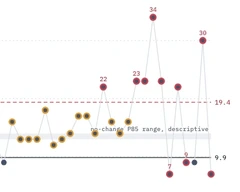
Flow ObservatoryA working tool I built to see where delivery work waits, record the changes made to a delivery system and check whether they helped. Its walkthrough is demonstrated with simulated data.
I have also applied it to real delivery data in the enterprise, where it showed work waiting longest in acceptance testing.
More independent research, on public data: Coherence debt and the coherence ratchet
The questions I work on
Are we investing in the right things?
Connecting technology strategy, portfolio decisions and benefit ownership.
Is our delivery system actually improving?
Using evidence to expose constraints, tell progress from activity, and redesign how work flows.
Can AI-generated change be trusted?
Investigating how organisations can speed up software delivery without losing system integrity, accountability or control.
Are the benefits real?
Connecting engineering improvements to measurable operational and economic outcomes.
Giving benefits an ownerFrom AI productivity to economic value
Research and tools
The research agenda01
Building organisations capable of change
The Art of Creating Self-Organizing Teams
The human and organisational foundations: autonomy, authority, relationships, leadership behaviour and structural constraints.
02
Measuring and governing change
The Predictability Loop and Flow Observatory
The operational foundations: flow, evidence, forecasting, intervention, uncertainty and delivery economics.
03 · Open research
Coherence debt
The coherence ratchet, an open-source reference tool
AI-assisted development makes code cheaper to produce without making a long-lived system cheaper to change. Individually safe changes accumulate into coherence debt: the structural cost carried by software that still works and is steadily harder to understand, coordinate and evolve. The name has earlier uses; I use it in this narrower, structural sense.
04 · Book in progress
Brownfield AI
Brownfield AI: Shipping Safe Changes to Existing Systems with Coding Agents
Forthcoming from Manning.